
There is an alternative to NATO in Europe, it’s just not one that’s palatable for the Atlanticist warmongers.
Jeffrey D. Sachs is University Professor and Director of the Center for Sustainable Development at Columbia University, where he directed The Earth Institute from 2002 until 2016. He is also President of the UN Sustainable Development Solutions Network (SDSN) and a commissioner of the UN Broadband Commission for Development.
Cross-posted from Other News
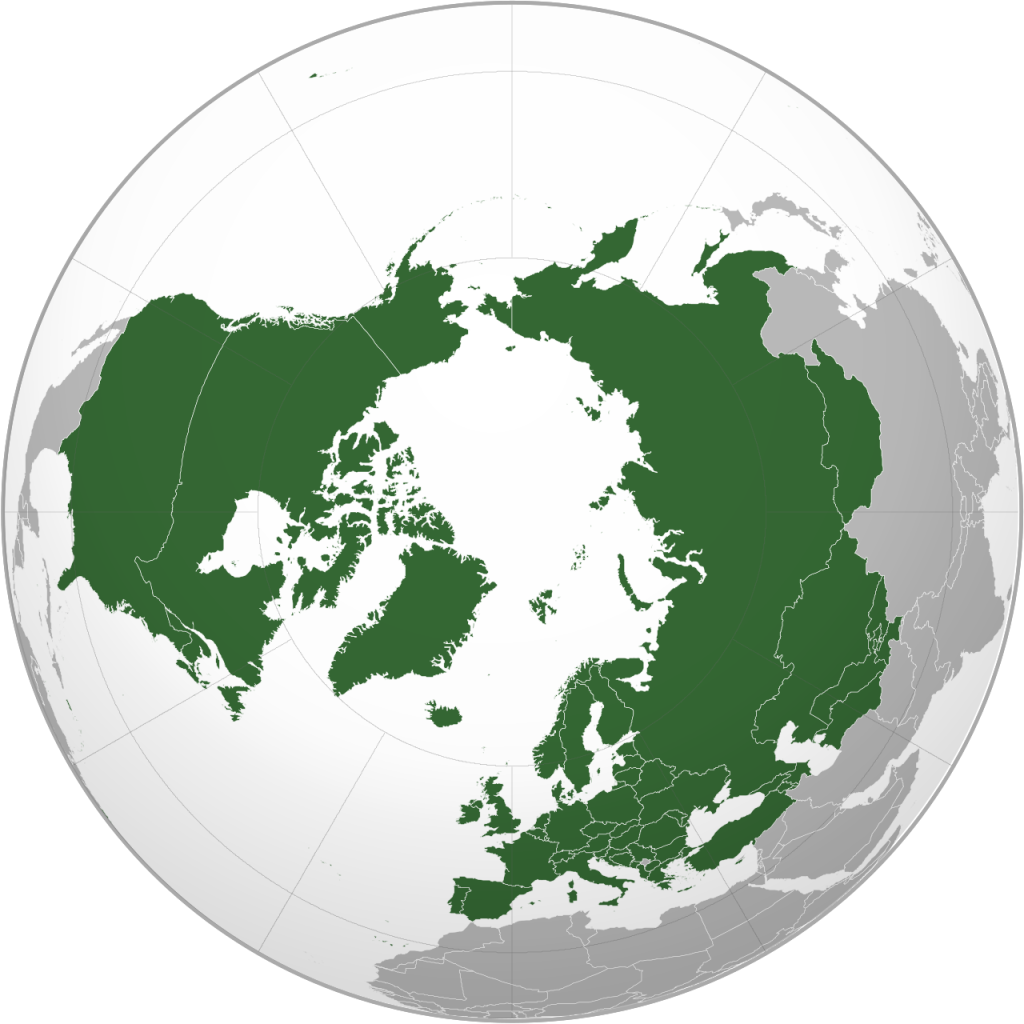
Russia has called for a new European security architecture for nearly two decades, beginning with President Putin’s Munich speech in 2007 and President Medvedev’s proposed European Security Treaty in 2008, followed by Moscow’s draft treaties of December 2021 and Putin’s call in June 2024 for indivisible security across Eurasia. The Western reply has not changed. As a British statement to the OSCE put it in June 2026, Russia keeps calling for a new security architecture, “but we already have one.”
Britain’s account is false. Europe has not one security architecture but two, built on incompatible premises. The first is the Organization for Security and Co-operation in Europe (OSCE), which includes every state from Vancouver to Vladivostok and rests on indivisible security, the principle that no state should strengthen its security at the expense of others. This is the Golden Rule applied to nations. The second is NATO, a U.S.-led alliance premised on Western predominance and military superiority over Russia. The OSCE is an architecture of international law and mutual restraint. NATO, as it has operated since the 1990s, is an architecture of Western power, and it has brought war.
The OSCE track began with Willy Brandt’s Ostpolitik, which recognized postwar borders and renounced force. It led to the Helsinki Final Act of 1975, in which thirty-five states from East and West agreed on principles of coexistence, including non-intervention in internal affairs. German reunification was the culmination. In February 1990, Secretary of State James Baker assured Gorbachev that NATO would not move “one inch eastward,” and German leaders gave the same assurance, as declassified records show. The OSCE’s Istanbul Charter of 1999 added that no state or organization could claim pre-eminent responsibility for peace in Europe.
The NATO track ran in the opposite direction. In 1994 the Clinton administration decided to enlarge NATO despite the 1990 assurances. George Kennan called the decision “the most fateful error of American policy in the entire post-cold-war era.” NATO expanded in 1999 and again in 2004, reaching the Baltic states, and in 1999 it bombed Serbia without UN authorization. In 2008, at Bucharest, NATO declared that Ukraine and Georgia would become members, ignoring the warning of William Burns, then U.S. ambassador in Moscow, that this was the brightest of all red lines for Russia. War in Georgia followed within months, begun by Georgia according to an EU-commissioned inquiry.
On February 21, 2014, Ukraine’s President Yanukovych signed an agreement with the opposition, witnessed by representatives of Germany, France and Poland, providing for a unity government and early elections. The next day the agreement was violently overturned. The Rada removed Yanukovych. It was an unconstitutional transfer of power, a coup, backed by Washington. Russia then annexed Crimea, in part to keep its naval base at Sevastopol out of NATO’s hands. The Minsk II agreement of 2015, designed to restore peace and endorsed by the UN Security Council, was never implemented by Ukraine, and Angela Merkel later said it had been meant to buy Ukraine time.
When Russia proposed treaties in December 2021 to end NATO’s eastward enlargement, I personally urged the White House to accept. The Biden administration refused Russia’s bid for diplomacy. After Russia invaded in February 2022, Russia and Ukraine began peace talks within four days and came close to an agreement in Istanbul based on Ukrainian neutrality. The United States and Britain blocked it, and hundreds of thousands of casualties have followed.
The NATO architecture fails because it is a hegemonic regime rather than an inclusive one. The draft U.S. Defense Planning Guidance of 1992 called for preventing the emergence of any rival power, and Zbigniew Brzezinski described Ukraine as the pivot without which Russia would cease to be a Eurasian empire. After 2014 the CIA built a network of secret bases in Ukraine along the Russian border. The U.S. simply ignored Russia’s legitimate security concerns at every stage and rejected entirely the doctrine of inclusive security. The U.S. would be boss, pure and simple. Europe went along, and has paid dearly, losing low-cost Russian energy and committing itself to an arms buildup that will crowd out investment in its future.
Europe should choose to return to the OSCE track, built on principles it has already signed. The first is a new Concert of Europe. It should bring together the European Union, Russia, the United Kingdom, Turkey and the United States, beginning with an OSCE summit in 2027, the first since 2010. The second principle is indivisible security in practice: no further NATO enlargement, a permanently neutral Ukraine on the Austrian model, and mutual limits on forces and missiles near Russian, Ukrainian, and EU borders, verified by the OSCE. The third is a recommitment to the Helsinki Final Act, meaning respect for borders and an end to regime-change operations by the U.S., Russia, or any other country. The fourth is a renewal of arms control, including a new ban on intermediate-range missiles in Europe, limits on drones and AI-based systems, and a successor to the New START nuclear agreement.
The fifth core principle is an end to double standards. The United States has claimed a security zone in the Western Hemisphere since the Monroe Doctrine of 1823, and its National Security Strategy of December 2025 proclaimed a “Trump Corollary.” Washington would never accept Russian or Chinese bases in Mexico or Canada. Great powers have no right to a sphere of influence over their neighbors, but they do have a right to a sphere of security, free of hostile military infrastructure on their borders.
A word, finally, to the Baltic states and Poland. Their fears are rooted in their histories, but their anti-Russia strategy rests on a false premise. The United States will not save them. Article 5 of the North Atlantic Treaty leaves each ally to decide its own response. Finland, which fought the Soviet Union twice, prospered for decades through neutrality and prudent relations with Moscow. Poland’s greatest catastrophes came when the great powers on either side of it went to war, and Poland’s interest lies in preventing such a clash rather than serving as a forward base. Poles should also recall, as I know personally, that Gorbachev facilitated Poland’s peaceful transition to democracy.
Europe should honor the legacy of the Helsinki Final Act, which turned fifty in 2025, by convening an OSCE summit next year, led by Europeans rather than by Washington, to negotiate a renewed treaty of indivisible security that includes Russia. Europe chose that path once before, and it brought peace.
KEEP RESISTANCE MEDIA ALIVE IN 2027

Be the first to comment