
Whether it is wildfires, floods or droughts, Spain’s climate has become increasingly extreme and the southern European country is moving from one ecological crisis to the next.
Chris Bambery is an author, political activist and commentator. His books include A People’s History of Scotland and The Second World War: A Marxist Analysis.
Cross-posted from Counterfire
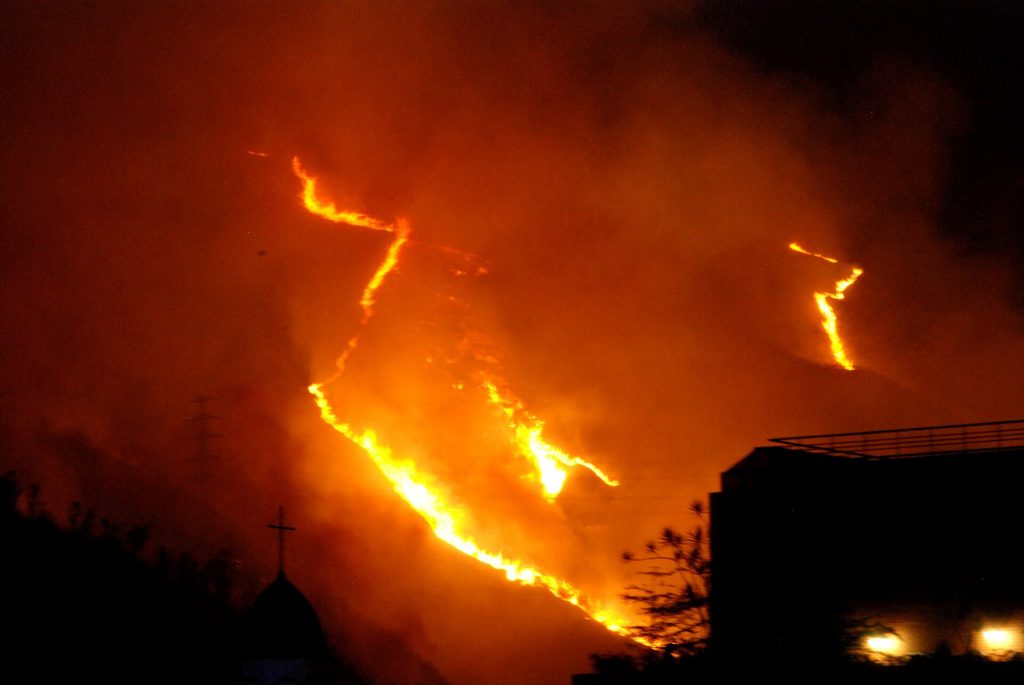
Spain has just experienced its hottest July on record. One result is a disastrous spate of forest fires, with 26 wildfires affecting around 150,000 hectares. They include the deadly fire in Los Gallardos in Almería in the Andalusia region and the gigantic fires in Guadalajara and Toledo, Castilla-La Mancha, as well as the most recent ones in Ávila (Castilla y Leon) and Madrid, which triggered a national emergency in Spain — the first time ever for a natural catastrophe of this nature.
The fires have forced mass evacuations of more than 300000 people and have badly affected regional and national economies.
As these terrifying wildfires swept Spain, scientists at the World Weather Attribution hurriedly produced a report concluding that such wildfires are 20 times more likely to happen in Spain because of human-caused climate change. These have created the hot and dry conditions responsible for Spain’s record-sized inferno.
Global warming over the past 20 years has tripled the odds of the severe fire risk conditions in Spain. The WWA concludes:
‘An event of this intensity is expected about once every 20 years in southwest France, compared with about once every 6 years in central Spain.’
Spain is having its hottest summer on record. This follows an incredibly wet January that allowed plants to grow before a severe drought hit. That combination increased wildfire fuel and the likelihood of wildfires.
Jacob Bendix, a fire scientist at Syracuse University explains:
‘We have always known that fires ignite more easily and spread more explosively under conditions of extreme heat and drought. And we’ve known for decades that extreme heat and drought are becoming more common due to anthropogenic climate change. So the general outline of these events, if not all the details, was tragically predictable.’
Dr Clair Barnes, a research associate at Imperial College London and part of the WWA study team, said:
‘We’ve seen repeatedly how climate change increases hot, dry, flammable conditions that are extremely conducive to wildfires. What’s unique about [the July fires in Spain and France] is that it’s still early in the season – and with another heatwave looming, these findings are extremely scary. What we’re seeing is a clear sign of the escalating impacts of [human-caused] warming.’
Added into this mix is rural depopulation which means swathes of countryside are no longer farmed. In central Spain that together with the lack of rain has created desert like conditions.
Air pollution rises
A fifth of Spain is already affected and almost three quarters of the country is at risk. The wildfires have released huge plumes of toxic smoke into the atmosphere. Dr Augustin Colette, at the French National Institute for Industrial Environment and Risks, says:
‘The smoke increased particulate [pollution] peak levels up to 20 times above what is considered ‘fair air quality’, and extremely poor air quality was felt up to 400 km away from the fires.’
About 1.5 million people a year are estimated to have their lives shortened by wildfire smoke.
After three years of dry conditions, Catalonia’s authorities announced a drought emergency early in 2024, which lasted for several months. In early 2025, low water reserves mean the city and most of the surrounding area were under an alert for drought.
Households were restricted to 200 litres (53 gallons) of water a day – less than a typical bathtub. Using tap water to water gardens, fill pools, or wash cars was forbidden under threat of fines.
In the autumn of 2025 intense rainfall caused flooding in Barcelona, as well as devastating damage and loss of life in Valencia, but was not enough to alleviate this drought. Spain’s National Climate Change Adaptation Plan notes that while rainstorms are expected to increase in intensity and frequency, these will do little to recharge aquifers.
Economic impact
Tourism makes up 15.6 per cent of Spain’s GDP. One study of the Balearic Islands concluded:
‘… the combination of high temperatures and high humidity levels can significantly increase the heat index and reduce visitors’ comfort, which appears to be influencing the choice of certain destinations during periods of extreme heat.’
We have witnessed a significant shift in tourists from both Spain and abroad holidaying on its northern coast rather than the Costas of the south. The Spanish tourist industry cannot take comfort from that. Beaches in the north are disappearing.
In these coastal areas soil saturation and overloaded ditches and downspouts exacerbates the risks of flooding and of material erosion due to the infiltration of moisture and water. Santiago de Compostela is at risk of hydraulic erosion due to the increasing amount and intensity of rainfall.
For commercial reasons fast-growing industrial eucalyptus tree plantations were planted extensively across Spain (especially in northwestern regions like Galicia). They are not indigenous and consume massive quantities of ground water, deplete local soil moisture, and lower water tables. Their dense, fast-growing root systems compete heavily with native plants, drying out surrounding streams and wetlands. Also these trees constantly shed bark that acts as ideal kindling for fires.
Mass tourism and the proliferation of golf courses – which use huge amounts of water – are no longer sustainable. World heritage sites are also at risk. Last summer a wildfire threatened Cordoba’s Mezquita, the spectacular mosque built when the city was capital of Al Andalus.
Floods and icy winters
Madrid is one of the world’s cities that has most suffered from a climate ‘flip’ in the last 20 years, with the weather switching from dry to wet extremes and vice versa. In January 2021 the city was one of the worst areas hit by an extratropical cyclone, known as Storm Filomena, that brought the heaviest snowfall in over a century and freezing temperatures for two weeks. Such snow falls are not usual in the city.
At the end of October 2024, 227 people were killed in towns near Valencia when a year’s worth of rain fell in just 12 hours, triggering flash-flooding. The torrential rain was caused by high-altitude isolated depression (DANA), fed by an overheated Mediterranean, which particularly impacted floodplains.
Crucial wetlands are also under threat. A study conducted by SEO Birdlife has found a ‘significant decrease’ in the winter presence of migratory birds in the Ebre Delta in Catalonia. This is one of the largest wetlands in the Iberian Peninsula.
According to the report’s authors, the decline can be attributed to ‘multiple pressure factors’ such as changes in the Ebre River, particularly ‘reduced water flow and sediment supply,’ ‘intensive agriculture’ exerting pressure on rice fields, including the excessive use of agrochemicals, and the ‘impacts of climate change.’
There is growing concern that falling water levels will see the delta inundated by the sea. The report also examined wetlands across Spain and assessed their condition as ‘poor’. It states that all the sites studied are under either high or very high pressure.
Climate Centrals Dr. Zachary Labe warns:
‘With each passing summer, the odds of dangerous and long-lasting heat waves are growing. A Climate Shift Index level of 5 indicates that this extreme heat was made exceptionally likely by climate change. Events like this pose serious risks to public health, ecosystems, food systems, safety, and the reliability of infrastructure.’
Agriculture feels the heat
Spain provides much of northern Europe’s fruit and vegetables – 16.6 percent of UK consumption in 2025. But Spain cannot sustain the amount of irrigated land this uses nor the water supply it requires.
Despite its very dry climate, Almeria has transformed itself into Europe’s vegetable garden through its 40,000 hectares of greenhouses—its “Sea of Plastic”—which produce thousands of tons of tomatoes, peppers, courgettes and cucumbers all year round. But these vast crop-producing areas are exacerbating the problem by using groundwater. The result is soil degradation. This can be reversed but it takes time and intensive work.
María José Polo Gómez, professor of hydraulic engineering at the University of Cordoba warns:
‘Now we have to rethink this model, because it’s very likely that it is not sustainable in the future’. Agriculture accounts for annual exports of some 60 billion euros – its the fourth largest producer in Europe.
This also requires a rethink in Britain. If climate change means there are vineyards in Scotland and French vignerons are buying up land in Southern England should there not be a debate about how we can grow more fruit and vegetables here – we are already producing strawberries for a greater part of the year?
It also requires a debate about our holiday patterns – how can we encourage environmentally friendly vacations for instance. More people are likely to holiday within the UK but at the moment holiday accommodation in Spain is far cheaper than here. If that changes it would help more people vacation here.


Be the first to comment