
Capitalism is becoming ever more dominated by large firms, and the owners of the small companies getting squeezed are naturally becoming increasingly disenchanted with the system.
Dr Tommaso Crescioli is an Economist at Prometheia and a Visiting Fellow in the European Institute at the London School of Economics and Political Science.
Dr Toon Van Overbeke is an Assistant Professor of Political Economy in the Faculty of Arts and Social Sciences at Maastricht University and a Visiting Fellow in the European Institute at the London School of Economics and Political Science.
Cross-posted from LSE EUROPP
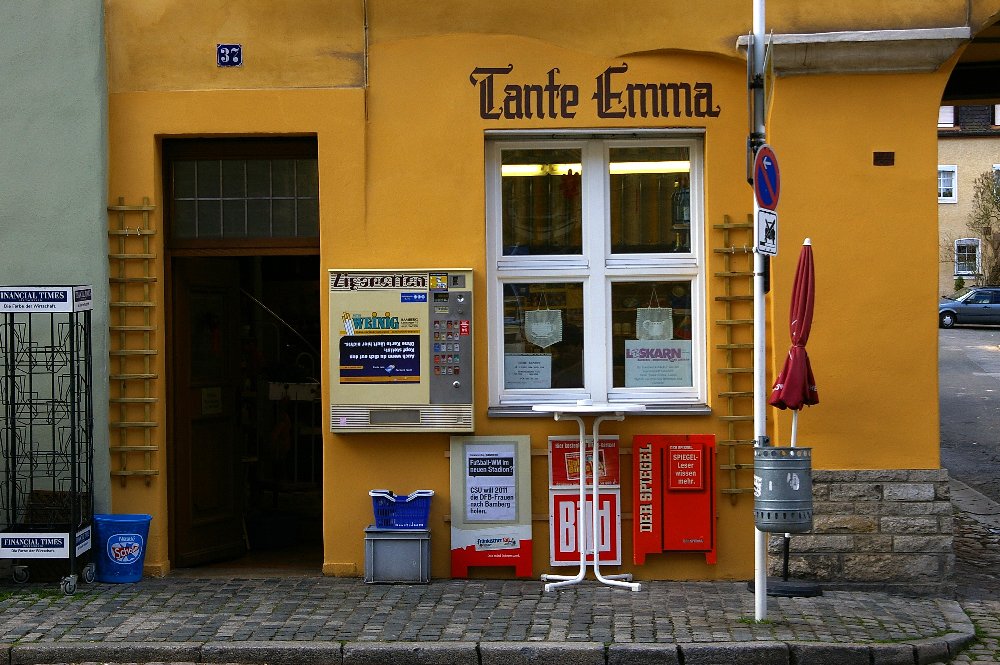
Small enterprises make up around 93 per cent of non-financial firms in Europe and employ about 30 per cent of the workforce. Their owners, from local butchers to independent merchants, are a core part of the middle class and have a lot to lose from political instability. Yet research repeatedly finds they are over-represented among radical right voters.
This raises an important question. Why would a group with such a stake in market capitalism turn against the system? In a new paper, we argue that part of the answer lies in an economic change that has received little attention in debates about the radical right: Markets have become more concentrated and small firms increasingly operate in the shadow of much larger ones.
We find that exposure to this change erodes small business owners’ trust in institutions and pushes them towards the radical right.
The rise of market power
Over recent decades, markets in advanced economies have become dominated by large firms. Part of the explanation is technological, as digital markets reward a few winners. Part is political, as weaker competition enforcement and lobbying have allowed concentration to grow.
Figure 1 shows what this looks like in our data. The average share of regional revenue held by micro-firms fell from just over 29 per cent in 2002 to under 24 per cent in 2018, while the number of mergers rose from around 7,000 to nearly 12,000 a year.
Figure 1: Micro-firms’ revenue share has fallen as merger activity has risen

Note: Panel A shows the yearly average, across region-industries, of the share of regional revenue held by micro-firms (1999 to 2018). Panel B shows the number of mergers per year (2002 to 2018). Source: Orbis Historical and SDC Platinum, authors’ calculations.
This is not simply another story about globalisation or automation. A factory closure removes jobs from a place. Concentration instead changes the terms on which small firms take part in the market, for example through exclusive supply contracts and restrictive pricing imposed by dominant suppliers.
Why would market power move votes?
We theorise that this trend is influencing the politics of small business owners through two channels. The first is income, since owners and their families depend directly on their firms. The second is status, since a local business is also a source of standing in the community and fear of status loss is a well-known driver of radical right support.
Large firms find it easier to organise politically than a dispersed population of small ones. Lobbying, campaign finance and the revolving door between public office and corporate boardrooms also make it easy to conclude that governments are unwilling or unable to protect small businesses and that incumbents are too close to the firms squeezing them. Both conclusions erode trust in institutions, which predicts support for parties that challenge them.
Radical right parties then become a natural ally. They channel this distrust against an establishment they portray as captured, and their economic nationalism promises protection from global corporations and open markets. It also speaks directly to the feeling of lost status, which gives owners a way to understand their decline as something done to them rather than a personal failure. Unlike the radical left, these parties also often campaign for lower taxes, which suits small business owners.
Putting the argument to the test
To test these arguments, we looked at mergers that sharply raise concentration in an industry across fourteen EU countries. Mergers are a recognised source of market power and the decision of two large firms to merge is plausibly unrelated to the politics of small business owners.
We then compare micro-firms, and the owners and family members who depend on them, in affected and unaffected industries before and after the event using firm accounts and the European Social Survey from 2002 to 2018.
The first result is that large mergers indeed squeeze small firms. They reduce the share of revenue held by micro-firms by around 13 per cent and raise their probability of leaving the market by around 9 percentage points.
Politics then follows as owners and family members exposed to a major merger are 19 to 25 percentage points less likely to report having voted for a governing party, and 9 to 13 percentage points more likely to report having voted for a radical right party that was not in government.
No other opposition party family gains in the same way. The same pattern appears in election results, where radical right gains are largest in regions where small firms employ the most people (Figure 2).
Figure 2: Radical right gains are largest where small firms matter most for jobs

Note: Estimated effect of a fall in micro-firms’ regional revenue share on the radical right vote share in constituencies, by tertile of workers employed in micro-firms in the region (with 95 per cent confidence intervals). Source: Constituency-Level Election Archive and Orbis Historical.
This link between market power and voting behaviour is also underpinned by attitudinal evidence (Figure 3). Exposed owners are less satisfied with the government and the economy and trust politicians and parliament less.
Figure 3: Major mergers erode satisfaction and trust among small business owners and their families

Note: Estimated change on 0 to 10 scales, with 95 per cent confidence intervals. The dashed vertical line marks no effect. Source: European Social Survey, 2002 to 2018.
Trust in democracy also falls, but the estimate is too imprecise to be sure. These voters do not seem to be simply switching parties. They appear to be losing faith in the institutions that, in their view, should have protected them.
A recurring fault line within capitalism?
These results indicate a recurring fault line in capitalism. When a few dominant corporations came to control American markets in the Gilded Age, a strong constituency formed against them and that backlash helped give rise to modern antitrust law.
Our findings suggest that concentrated markets can still produce a backlash, with small producers and shopkeepers on one side and corporate giants on the other. The difference today is that this discontent may find an outlet in the radical right rather than in demands to restore competition.
This matters because European policy is moving in the opposite direction. In the face of geopolitical competition, and following the 2024 Draghi report, the Commission published draft revised merger guidelines in April 2026 that give more weight to scale, resilience and global competitiveness.
There are strong strategic arguments for this, but critics also warn that it risks favouring incumbents and politicising merger control. Our findings add a further consideration. Industrial champions are usually judged on competitiveness and efficiency, but they may also carry a political cost that falls on voters who have traditionally anchored the political centre.
The experience of the Gilded Age suggests that such a cost can outlast the economic case for scale. Small business owners have historically been seen as defenders of the system. Our findings show that some now see the market itself as the threat.



Be the first to comment