
The expansion of democracy did not eliminate propaganda. It increased the political importance of influencing public opinion.
Glenn Diesen is Professor of political science with research focus on geoeconomics, Russian foreign policy and Eurasian integration
Cross-posted from Glenn’s Substack
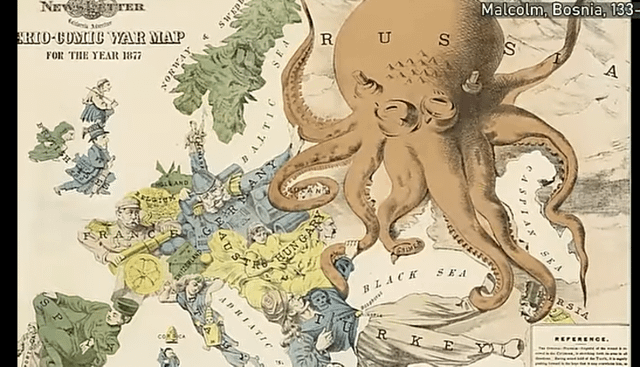
Propaganda is commonly confused with lies, deception and disinformation. This is a fundamental misunderstanding of what propaganda actually does. Propaganda is not primarily about providing false information, but about bypassing reason by manipulating the unconscious group psychology of the public. Even truthful information can be propaganda if it is presented in a manner that appeals to emotions and instincts rather than rational reflection.
The greatest success of Western propaganda has arguably been to convince the public that propaganda is something authoritarian states do. Western democracies, by contrast, merely provide information, promote democratic values and educate their populations. This distinction is itself a product of propaganda, which becomes less effective once people recognise that they are being manipulated.
The Science of Manufacturing Consent
The First World War was a turning point in the development of propaganda as a science. Millions of people were mobilised for industrial-scale warfare, often with extraordinary enthusiasm, by appealing to patriotism, fear, national identity and moral righteousness. The experience demonstrated that public opinion could be organised and manipulated in ways that did not depend on rational arguments.
Edward Bernays, one of the founders of modern propaganda, drew heavily on the work of his uncle, Sigmund Freud. Freud had explored how unconscious instincts and group psychology influence human behaviour, often overriding the rational faculties of the individual. Bernays recognised the political implications: if the unconscious motivations of groups could be understood, public opinion could also be manipulated without people being aware of it.
Having worked on American propaganda efforts during the First World War, Bernays subsequently applied these methods to commercial advertising. His campaign to promote cigarettes among women associated smoking with female emancipation, presenting cigarettes as “torches of freedom”. The campaign did not seek to convince women that smoking was beneficial. Instead, cigarettes were linked to the desire for freedom and social status.
The same principles are applied to politics. Cars are marketed by associating them with status and sexual attractiveness, while wars are sold as struggles for freedom, democracy and civilisation. The propagandist does not need to invent these ideals. Rather, genuine values are exploited to mobilise support for policies that might otherwise struggle to withstand rational scrutiny.
Foreign affairs are particularly susceptible to propaganda because most people have little direct experience of the countries and conflicts they are asked to have strong opinions about. The complexity of international politics is reduced to familiar stereotypes, which provide mental shortcuts for interpreting events. The most effective shortcut is to divide the world into “Us” and “Them”.
The Psychology of Good vs Evil
Human beings have powerful instincts to identify with groups. Nationality, religion, ideology and civilisation provide belonging and security, while external threats enhance internal solidarity. The propagandist exploits these instincts by assigning virtuous characteristics to the in-group and malicious intentions to the out-group. “We” represent freedom, democracy, human rights and civilisation. “They” represent authoritarianism, aggression, oppression and barbarism.
This dichotomy establishes a moral hierarchy in which our interests become universal values, while the interests of adversaries are dismissed as illegitimate. Our military interventions are humanitarian operations, while those of adversaries are unprovoked wars of aggression. Our efforts to influence foreign governments are democracy promotion, while similar activities by adversaries constitute interference. Our information is journalism, while their information is propaganda.
As stereotypes become embedded, contradictory evidence is interpreted to preserve the established narrative. Conformity is rewarded as moral virtue, while dissent becomes evidence of sympathy for the enemy.
Why Democracies Depend on Propaganda
Democracy rests on the principle that sovereignty belongs to the people. Bernays and other many of the initial scholars on propoganda therefore recognised that governments dependent on public consent have powerful incentives to manufacture that consent. Authoritarian governments can rely more extensively on coercion, while democratic governments must persuade the population to support their policies.
Bernays recognised that manipulating organised habits and opinions was an important element of democratic society. The expansion of democracy therefore did not eliminate propaganda. It increased the political importance of influencing public opinion.
Yet, propaganda acquired negative connotations following the two world wars. Bernays rebranded his profession as “public relations”, while governments increasingly adopted terms such as public diplomacy, strategic communications and information management. The methods remained the same, although the language changed.
The concept of propaganda was itself propagandised. Propaganda became something associated with the adversary, while our efforts to shape public opinion were presented as education and objective information. The more convinced a population becomes that propaganda is exclusively a problem in other societies, the less capable it becomes of recognising manipulation within its own political system.
When Propaganda Undermines National Security
Propaganda can be an effective instrument of state power. It mobilises resources, strengthens national unity and encourages sacrifices in pursuit of collective objectives. However, its effectiveness in mobilising confrontation creates problems when circumstances change and diplomacy becomes necessary. Presenting the adversary as evil assists in mobilising the public for war, yet a workable peace through diplomacy becomes problematic as the public will resist any mutual understanding and compromise with ‘evil’.
During the Cold War, anti-Soviet propaganda helped mobilise Western societies against a powerful geopolitical rival. Yet, the same stereotypes complicated efforts to pursue détente and negotiated settlements. When the adversary is represented as inherently evil, compromise becomes appeasement. Diplomacy is interpreted as weakness, while recognising the security concerns of opponents becomes morally suspect.
The persistence of anti-Russian stereotypes after the Cold War has contributed to a political environment in which relations with Russia are interpreted through moral categories rather than the changing balance of power. The instrument designed to strengthen national security can consequently become an obstacle to rational foreign policy.
Recovering Reason in International Politics
The most dangerous feature of propaganda is not that it makes people believe lies. It is that propaganda makes people less capable of recognising the limits of their own understanding.
A population convinced of its moral superiority becomes increasingly unwilling to examine the interests and motivations of adversaries. Political disagreements become tests of loyalty, while the search for compromise is replaced by ideological conformity.
A rational foreign policy requires recognising that all states have interests, that competing security concerns must be understood, and that moral superiority does not eliminate the need for diplomacy.
Understanding an adversary does not require justifying its actions. It is necessary for developing policies capable of producing greater security. The greatest obstacle to peace may therefore be the comforting conviction that we are guided by reason and universal values, while our adversaries are driven by propaganda and irrational ambitions.
_______________________________________________________
This article includes excerpts from my book “Russophobia: Propaganda in International Politics” – https://www.amazon.com/clp/9811914672?lv=shuf&channelId=500
____________________________________


Be the first to comment