
This is a war which will have big consequences not just for regional hegemony, but for the future of American power full stop.
Michael Hudson’s Killing the Host, The Collapse of Antiquity and The Destiny of Civilization are published by CounterPunch Books.
Cross-posted from Common Dreams
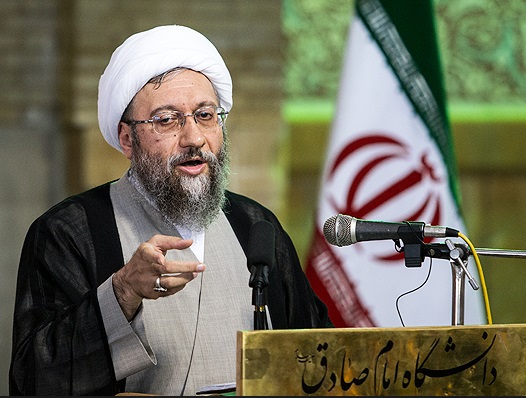
Iran and Donald Trump have each explained why failure to fight the current war to the end would simply lead to a new set of mutual attacks. Trump announced on March 6 that “There will be no deal with Iran except unconditional surrender,” and announced that he must have a voice in naming or at least approving Iran’s new leader, as he has just done in Venezuela. “If the U.S. military must utterly defeat it and bring about a regime change, or else you go through this, and then in five years you realize you put somebody in who’s no better.” It will take at least that long for America to replace the weaponry that has been depleted, rebuild its radar and related installations and mount a new war.
Iranian officials likewise recognize that U.S. attacks will keep being repeated until the United States is driven out of the Middle East. Having agreed to a ceasefire last June instead of pressing its advantage when Israeli and regional U.S. anti-missile defenses were depleted, Iran realized that war would be resumed as soon as the United States could re-arm its allies and military bases to renew what both sides recognize as a fight to some kind of final solution.
The war that began on February 28 can realistically be deemed to be the formal opening of World War III because what is at issue are the terms on which the entire world will be able to buy oil and gas. Can they buy this energy from exporters in currencies other than the dollar, headed by Russia and Iran (and until recently, Venezuela)? Will the present U.S. demand to control of the international oil trade require oil-exporting countries to price it in dollars, and indeed to recycle their export earnings and national savings into investments in U.S. government securities, bonds and stocks?
That recycling of petrodollars has been the basis of America’s financialization and weaponization of the world’s oil trade, and its imperial strategy of isolating countries that resist adherence to the U.S. ruler-based order (no real rules, but simply U.S. ad hoc demands). So what is at issue is not only the U.S. military presence in the Middle East – along with its two proxy armies, Israel and ISIS/al Qaeda jihadists. And the U.S. and Israeli pretense that it is about Iran having atomic weapons of mass destruction is as fictitious an accusation as that levied against Iraq in 2003. What is at issue is ending the Middle East’s economic alliances with the United States and whether its oil-export earnings will continue to be accumulated in dollars as the buttress of the U.S. balance of payments to help pay for its military bases throughout the world.
Iran has announced that it will fight until it achieves three aims to prevent future wars. First and foremost, the United States must withdraw from all its military bases in the Middle East. Iran has already destroyed the backbone of radar warning systems and anti-aircraft and missile defense sites in Jordan, Qatar, the United Arab Emirates (UAE) and Bahrain, preventing them from guiding U.S. or Israeli missile attacks or attacking Iran. Arab countries that have bases or U.S. installations will be bombed if they are not abandoned.
The next two Iranian demands seem so far-reaching that they seem unthinkable to the West. Arab OPEC countries must end their close economic ties to the United States, starting with the U.S. data centers operated by Amazon, Microsoft and Google. And they not only must stop pricing their oil and gas in U.S. dollars, but disinvest in their existing petrodollar holdings of the U.S. investments that have been subsidizing the U.S. balance of payments since the 1974 agreements that were made to gain U.S. permission to quadruple their oil-export prices.
These three demands would end U.S. economic power over OPEC countries, and thus the world oil trade. The result would be to dedollarize the world’s oil trade and re-orient it toward Asia and Global Majority countries. And Iran’s plan involves not only a military and economic defeat for the United States, but an end to the political character of the Near Eastern client monarchies and their relations with their Shi’ite citizens.
Step 1: Driving the United States out of its Middle Eastern military bases
Iraq’s parliament has continued to demand that U.S. forces leave their country and stop stealing its oil (sending most of it to Israel). It has just approved legislation yet again directing that American forces leave their country. Meeting with senior advisor to Iraq’s interior minister and his accompanying military delegation in Tehran last Monday (March 2), Iran’s Brigadier General Ali Abdollahi reiterated the demand that Iran has been making for the last five years, ever since Donald Trump closed his first administration on January 3, 2020. by ordering the treacherous assassination of the two top Iranian and Iraqi anti-terror negotiators, Qassem Soleimani and Abu Mahdi al-Muhandis, who were seeking to avoid an all-out war. Seeing that Trump is now continuing the same policy, the Iranian commander stated: “Expulsion of the United States is the most important step toward the restoration of security and stability to the region.”
But all the Arab kingdoms are hosting U.S. military bases. Iran has announced that any
country permitting U.S. aircraft or other military forces to use these bases will risk immediate attack to destroy them. Kuwait, Bahrain and the United Arab Emirates have already come under attack, leading Saudi Arabia to promise Iran not to permit the U.S. military to use its territory for part of its war.
Spain has banned the U.S. use of its airfields to support its war against Iran. But when its Prime Minister Pedro Sánchez forbade the United States from using them, President Trump pointed out at an Oval Office news conference that there was nothing that Spain really could do to prevent the U.S. air force from using the Rota and Morón installations in southern Spain that the U.S. and Spain share, but which remain under Spanish command. “And now Spain actually said we can’t use their bases. And that’s all right, we don’t want to do it. We could use the base if we want. We could just fly in and use it, nobody is going to tell us not to use it.” What would Spain do to prevent it, after all? Shoot down the U.S. aircraft?
This is the problem confronting the Arab monarchies if they try to deny U.S. access to their own U.S. bases and airspace to fight Iran. What can they do?
Or more to the point, what may they be willing to do? Iran is insisting that Qatar, the United Arab Emirates, Bahrain, Kuwait, Saudi Arabia, Jordan and other Near Eastern monarchies close all U.S. military bases in their kingdoms and block U.S. use of their airspace and airports as a condition for not bombing them and extending the war to the monarchic regimes themselves.
Refusal – or inability to prevent the U.S. from using bases in their countries – will lead Iran to force regime change. This would be easiest in countries in which Palestinians are a large proportion of the labor force, as in Jordan. Iran has called for Shi’ite populations in Jordan and other Near Eastern countries to overthrow their monarchies to break away from U.S. control. There are rumors that Bahrain’s king has left the country.
Step #2: Ending the Middle East’s commercial and financial linkages to the U.S.
Arab monarchies are under further pressure to meet Iran’s ultimate demand that they decouple their economies from that of the United States. Ever since 1974, they have tied their economies to the United States. Most recently, Bahrain, the UAE and Saudi Arabia have sought to use their energy resources to attract computer data centers, including Starlink and other systems that have been associated with U.S. regime-change and military attacks on Iran.
Opposing U.S. plans to tightly integrate its non-oil sectors with the Arab OPEC Middle East, Iran has announced that these installations are “legitimate targets” for its drive to expel America from the region. One cloud computing manager suggested that Iran’s AWS attack on Amazon’s data center was targeted because it was serving military needs, much as Starlink (which the UAE is interested in financing) was used in February in the U.S. attempt to mobilize demonstrations against Iran’s government.
Step #3: Ending the recycling of OPEC oil exports into U.S. dollar holdings
The most radical Iranian demand has been for its Arab neighbors to dedollarize their economies. That is a key to preventing U.S. businesses from dominating their economies and hence their governments. An Iranian official told CNN that Iran has accused companies that buy U.S. government debt and invest in Treasury bonds of being partners in the war against itself, because it sees them as financiers of this war. “Tehran considers these companies and their managers in the region as legitimate targets. These individuals are warned to declare their capital withdrawal as soon as possible.”
Saudi Arabia, UAE, Kuwait, and Qatar are indeed discussing withdrawing from U.S. and other investments, as Iran’s blocking of Hormuz has led them to stop producing oil and LNG now that their storage capacity is full. Their income from energy, shipping and tourism has stopped. The Gulf States met on Sunday, March 8, to discuss drawing down their $2 trillion in U.S. dollar investments (mainly from Saudi Arabia). The threat is that this is an initial step to diversifying OPEC investment outside of the U.S. dollar.
In conjunction with U.S. surrender of its military bases in the Middle East, such decoupling from the dollar would greatly reduce U.S. control of Middle Eastern oil. It would end the U.S. ability to use this oil trade as a chokepoint with which to coerce other countries into adhering to Trump’s America First ruler-based order (his own whims, with no clear rules).
For the monarchies themselves, the changes demanded by Iran to end the U.S. war to control the Middle East may have an effect similar to the aftermath of World War that ended the epoch of European monarchies. In this case, it may end monarchic regimes in many of the countries whose economies and political alliances have been based on an alliance with the United States.
For starters, pressure is now on Saudi Arabia, Qatar, Egypt, Jordan, Bahrain, Kuwait and the United Arab Emirates, all of which have agreed to join Trump’s Board of Peace. Indonesia, with the world’s largest Islamic population, has just withdrawn its offer to provide 8000 troops for his Gaza “peace plan.” And Iran is pressuring Arab monarchies to follow suit by withdrawing to protest U.S. policy.
Will they do so? And will they go so far as to end U.S. access to bases in their territory? runs if they try to avoid being offensive to the United States, they will leave themselves open to Iranian accusations that they are not really opposing the war. But if they follow Iran’s request, they run the risk that the United States may simply seize or at least freeze their dollar holdings to force them to change their mind.
Iran is putting pressure on the most U.S.-friendly Arab monarchies. The last few days have seen it attack two Saudi oil depots, and a drone has hit a desalination plant in Bahrain in response to an attack launched from Bahrainian territory on Iran’s desalination plant at Qeshm Island. Most of the Arab kingdoms depend on desalination to a much higher degree, topped by Saudi Arabia at 70% and Bahrain at 60%. That makes Bahrain’s attack akin to the folly of fighting with bricks while living in a glass house oneself.
Collateral effects of Iran’s goal to drive the United States out of the Middle East
Iran will escalate as Israel and the U.S. military exhaust their supply of anti-aircraft and missile defense, enabling Iran to launch its serious attack on a scale that it stopped short of last June when it agreed to a ceasefire. It will start using its most sophisticated missiles to attack Israel and other U.S. proxies.
There’s nowhere to put additional Arab oil production now that Iran has closed the Strait of Hormuz to all but its own ships, most of which are carrying oil destined for China. The storage tanks are full, with nowhere to save new production, which has therefore been forced to stop. And as for liquified natural gas, which is exported mainly by Qatar, its LNG gas works have been bombed. They will have to be rebuilt, which will take two weeks plus an equal time to put them back online by cooling this gas properly.
In any case, no ships are even trying to approach Hormuz because Lloyd’s of London is not issuing insurance policies. The U.S. military has recently sunk or seized Russian ships carrying oil, but the soaring oil prices have led it to permit such transfers in order to stem global inflation. Treasury Secretary Scott Bessent has said the Treasury Department is examining whether additional sanctioned Russian crude shipments could be released to the market. “We may unsanction other Russian oil,” he said. “There are hundreds of millions of barrels of sanctioned crude on the water … by unsanctioning them, Treasury can create supply.” His remarks follow a U.S. decision to issue a temporary 30-day waiver allowing Indian refiners to purchase Russian oil in an effort to maintain global supply.
Throughout the world, rising oil and gas prices will force economies to choose between having to cut back domestic social spending in order to pay their dollar debts. This war is splitting the US/NATO West from the Global Majority, by creating strains that Japan, Korea and even Europe no longer can afford. The chaotic effect of the U.S. attack has destroyed the narrative that has enabled U.S. diplomats to demand subsidies and “burden sharing” for its global military spending. The predicate fiction is that the world needs U.S. military support to protect it against Russia and China, and now Iran, as if these countries pose a real threat to Europe and Asia.
But instead of protecting the rest of the world by waging the present Cold War, the chaos in world oil and gas markets resulting from its attack on Iran shows that the United States actually is the greatest threat to the security, stability and prosperity of its allies. Its attack has fallen largely on its closest allies – Japan, South Korea and Europe. Their gas prices have soared by 20% and are now on their way further upward today. Korea’s stock market has plunged 18% in the last two days. All this is shifting support for removing U.S. control of Near Eastern oil and reorienting it to a market free from U.S. demands for control and dollarization of the world’s energy trade.


Be the first to comment