
A critique of David Harvey’s new book, ‘The Story of Capital’.
Michael Roberts is an Economist in the City of London and a prolific blogger.
Cross-posted from Michael Roberts’ blog
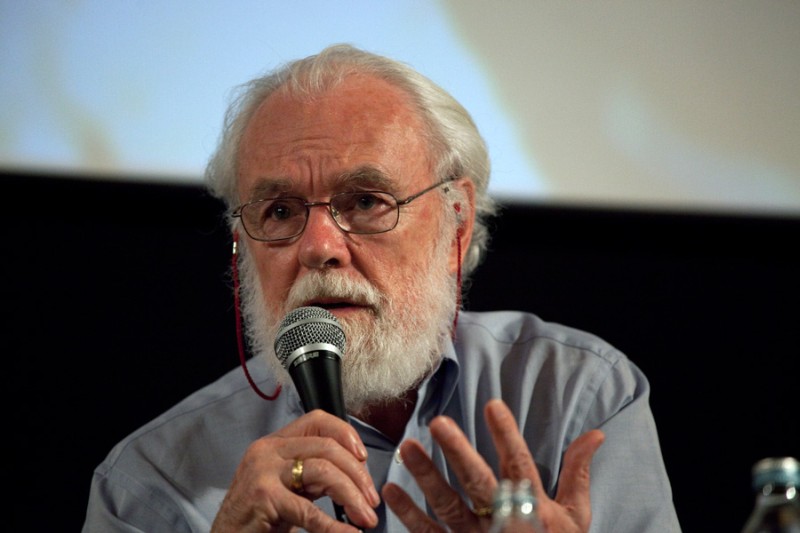
Professor David Harvey is a highly influential Marxist geographer and economic theorist whose work spans several decades. He is the author of many important books over the decades analysing capitalism and its ever-changing features and contours. Although having turned 90 years old last October, he still teaches at the Graduate Center of the City University of New York.

Now in 2026 he has yet another new book, entitled The story of capital: What Everyone Should Know About How Capital Works. To quote the blurb of his publisher, Verso: “In The Story of Capital, Harvey takes a synoptic approach to the conceptual architecture as a whole and guides us through the key moments, from labour and technology to the state and geopolitics, via the profit rate, social reproduction, the relationship to nature, fictitious capital and the return of the rentiers. In doing so, Harvey has produced a work which will become a key reference for all those trying to grasp the nature of contemporary capitalism.” And Verso has a video of Harvey presenting some of the ideas in his new book.

All Harvey’s books been central to the education of many Marxist theorists over the decades. He has established himself as an icon in Marxist economic theory, in particular. But here’s the rub. Harvey’s interpretation of capitalism in the 20th and 21st century is, in my view, misleading to his readers and his theoretical ‘innovations’ to explain developments in capitalism since Marx are basically wrong. I am going to argue my case for this conclusion, not through a review of his latest book, but instead by referring to various posts on my blog and papers where I have taken up Harvey’s analysis over the last decade or more.
Harvey has written many books both on the geography of capitalism as early as the 1960s and also its economic foundations – as early as the 1980s with his first seminal work, The Limits to Capital (1982) and through to the early 2000s with the New Imperialism (2003) and A Brief History of Neoliberalism (2005). But I shall start my critique with his book, The Enigma of Capital (2010).

As I explained in my blog post of that year, in that book, Harvey argues that the “limits to profitable investment” as a major cause of capitalist crisis do not lie in Marx’s law of the tendency of the rate of profit to fall (LRTPF). Harvey specifically rejects the LRTPF as having any role in causing crises, particularly in the Great Recession. Instead, he sees the Great Recession as being caused by the neoliberal policies of the previous 25 years that suppressed wages and promoted excessive debt. That eventually created a lack of ‘effective demand’, Keynesian-style, which then led to a collapse in profitability, not the opposite, as Marx’s law of profitability would have it.
For Harvey, ‘neoliberalism’ had “changed nearly every level of the Marx’s (reproduction) schema” as outlined in Volume Two of Capital. The nature of capitalist crises was different from what it was in the 1970s. Now capitalist demand was not enough to ‘absorb the surplus’ of profits. So it had to be filled by credit or borrowing. And when that credit collapsed, there ensued a crisis of overproduction or underconsumption.
In Volume Two Marx rejected that any crisis was the result of the disproportion between the two sectors of consumption and investment or an inability to ‘absorb’ a surplus. Increased investment means that the capital goods sector is likely to grow faster than the consumer goods sector over time. But, to quote Andrew Kliman: “what the reproduction schemes show is that growth can occur indefinitely, despite shrinking consumption demand, by means of an increase in the demand for machines to produce new machines and a relative expansion of machine production” (unpublished manuscript). Capitalist demand, either for new investment or for consumption, can still be sufficient to realise value production.
So the cause of crises in capitalism is not to be found in Marx’s reproduction schema. The need for credit in capitalist mode of production is NOT because there is a lack of demand or a need to ‘absorb’ a surplus of consumer goods. It is because funding fixed capital like plant, offices and new technology cannot be delivered from the value created in just one production cycle. So credit must be supplied to enable capitalists to buy means of production that cost more than profits in one cycle. Credit is supplied on the promise of delivering enough value down the road to pay back the debt and any interest.
The risk here is that this money capital or credit turns out to be ‘fictitious’, as Marx put it, because investment is not productive enough to deliver sufficient surplus value to pay back the debt and interest. That is especially the case when investors plough their funds into stock market speculation rather than directly invest in productive sectors. So crises in capitalism are ultimately caused by insufficient surplus value to fund investment and credit, not by the inability to absorb too much surplus value, as Harvey suggests. For more on this, see Paul Mattick Jnr’s excellent critique of Harvey’s work,
In 2014, Harvey had a new book out, enticingly called Seventeen Contradictions of Capitalism, which is well worth reading (http://davidharvey.org/2014/03/new-book-seventeen-contradictions-end-capitalism/). He takes his ‘correction’ of Marx’s crisis theory a step further in saying that the “contradiction at the heart of capitalism” is a drive to accumulate capital “that leads to consumers with no means of consumption…” Lack of consumption causes crises, not lack of profit. So Marx’s law of profitability is irrelevant as an explanation of crises. According to Harvey, the double-dip recession of the early 1980s that devalued and destroyed capital and restored profitability had nothing to do with it. Instead, “it was all about politics”.

Harvey does not just reject Marx’s law of the tendency of the rate of profit to fall as having any significant role as a cause of crises under capitalism. In The enigma of capital, he states that “There is no single causal theory of crisis formation as many Marxist economists like to assert. There is, for example, no point in trying to cram all of this fluidity and complexity into some unitary theory of, say, a falling rate of profit”.
Indeed, Harvey singled out those like me who consider capitalist crises are based on Marx’s law of profitability. In a paper written in 2014, he writes, “In the midst of crises, Marxists frequently appeal to the theory of the tendency of the rate of profit to fall as an underlying explanation. In a recent presentation, for example, Michael Roberts attributes the current long depression to this tendency”. He continues: “Roberts bolsters his case by attaching an array of graphs and statistical data on falling profit rates as proof of the validity of the law. Whether the data actually support his argument depends on (a) the reliability and appropriateness of the data in relation to the theory and (b) whether there are mechanisms other than the one Roberts describes that can result in falling profits.”
Harvey accepts the views of the MEGA scholars like Michael Heinrich that Marx also probably became sceptical of his law of profitability and dropped it. “I find Heinrich’s account broadly consistent with my own long-standing scepticism about the general relevance of the law” Indeed, Harvey has doubts that it is a law at all: “we know that Marx’s language increasingly vacillated between calling his finding a law, a law of a tendency or even on occasion just a tendency”.
Harvey thus argued that proponents of Marx’s law as the basis of a theory of crises are one-sided and monocausal in our approach because: “proponents of the law typically play down the countervailing tendencies”. Thus we LTRPF theorists rule out many features of capitalism that may be better causal factors in crises like a financial meltdown. Apparently, we “suggest financialization had nothing to do with the crash of 2007-8. This assertion looks ridiculous in the face of the actual course of events. It also lets the bankers and financiers off the hook with respect to their role in creating the crisis.” This was a bizarre charge, considering that I and many others had made much of the role of finance in the 2008 crash (see my book: The Great Recession – a Marxist view (2009), or my chapter in World in Crisis (2018) entitled, Debt matters.
Harvey doubted the validity of the mounting empirical evidence supporting Marx’s law of profitability because “there is plenty of evidence in the ‘business press’ that the rate of profit, or at least the mass of profit, in the US has been rising, not falling”. And even if it is correct that there was a post-war fall in the rate of profit, “profit can fall for any number of reasons”. He cites a fall in demand (the post-Keynesian explanation); a rise in wages (the neo-Ricardian profit squeeze explanation); ‘resource scarcities’ (neoclassical); monopoly power (the Monthly Review school view of rent extraction from industrial capital).
But many authors have since shown that Marx’s law of profitability is not logically incoherent or ‘indeterminate’ or that he dropped it in his later years, as Heinrich suggests. See here and Cristos Balomenos here, and my own Engels 200, pp106-111. As for being monomaniacal or one-sided, as Carchedi put it: “if crises are recurrent and if they have all different causes, these different causes can explain the different crises, but not their recurrence. If they are recurrent, they must have a common cause that manifests itself recurrently as different causes of different crises. There is no way around the ”monocausality” of crises.”
By 2015, Harvey wanted his readers to think that Marx saw crises as a result of ‘mutual interaction’ between different parts of the circuit of capital: production is determined by ‘other moments’. Thus the causal sequence is not ‘mono-causal’ or one-way: from the profitability of capital to investment and production and then consumption, but is one of ‘mutual interaction’. In a paper at the time, I interpreted Marx’s view differently. Marx says “a definite production thus determines a definite consumption, distribution and exchange as well as definite relations between these different moments”. Only in a “one-sided form” is production determined by other moments. Production leads and sets off a chain reaction that feeds back on production in a crisis.
But you see, said Harvey, crises under capitalism are multi-causal: “In the same way that the human body can fall sick and die for all sorts of different reasons other than sheer old age, so there are multiple points of stress and potential failure within the organic whole of capital. A failure at one point, moreover, typically engenders a failure elsewhere.” Every crisis is different with different causes and so “the job of the Marxist diagnostician is to figure out what ails capital this time around” – without reference to any previous crisis. And we can’t do any better than this because what causes illness in a human body can change with time e.g. genes mutate, environments change and diets and healthcare vary etc.
In my post at the time I offered a alternative metaphor for crises in capitalism: that of a pinball machine. The ball could represent the accumulation of capital. It whizzes round hitting various obstacles in a chain reaction. They light up, representing various crises, each slightly different. One crisis bounces onto another (from housing to stocks to banks etc), as in Harvey’s metaphor. But the pinball machine’s raison d’etre is that its level slopes down so that gravity takes over; that is the essence of its working. The ball is always tending to drop to the bottom and even intervention by levers from the outside (government action etc) cannot stop that tendency which eventually overrides the obstacles and levers (counter tendencies) and the ball drops into the hole at the bottom. Accumulation stops.
In a later book, Marx, Capital and the Madness of Economic Reason, Harvey argues that, while Marx gives a great analysis of the production part of capitalism in Capital Volume One, his later volumes are not complete and have been scratched together by Engels. And thus Marx’s analysis falls short of explaining developments in modern capitalism. That’s because production is “just a small sliver of value in motion”. Harvey reckons that crises under capitalism are at least as likely, if not more so, to be found in a breakdown in circulation or realisation than in the production of surplus value (Volume 2). And crises are more likely now to happen in finance and over debt due to ‘financialisation’ (from Volume 3).

Consequently, the more crucial points of breakdown and class struggle are now to be found outside the traditional battle between workers and capitalists in the workplace or point of production. They are in communities and streets and not in the workplace.
In contrast, In my view, Volumes One, Two and Three link together to give us a theory of crises under capitalism based on the drive for profit and the accumulation of surplus value in capital, which falls apart at regular and recurring intervals because of the operation of Marx’s law of profitability. As Paul Mattick Snr put it back in the 1970s, “Although it first appears in the process of circulation, the real crisis cannot be understood as a problem of circulation or of realisation, but only as a disruption of the process of reproduction as a whole, which is constituted by production and circulation together. And, as the process of reproduction depends on the accumulation of capital, and therefore on the mass of surplus value that makes accumulation possible, it is within the sphere of production that the decisive factors (though not the only factors) of the passage from the possibility of crisis to an actual crisis are to be found … The crisis characteristic of capital thus originates neither in production nor in circulation taken separately, but in the difficulties that arise from the tendency of the profit rate to fall inherent in accumulation and governed by the law of value.”
Harvey claims that crises occur mainly because wages are squeezed down to the limit, as they were in the neo-liberal period after the 1970s (thus it is a ‘realisation’ not a production problem). But was the first simultaneous slump in post-war capitalism in 1974-5 due to low wages? On the contrary, most analysts (including Marxists) at the time argued that wages were ‘squeezing’ profits and that caused the slump. And most Marxists now agree that this was a profitability crisis leading to the ensuing slump in 1980-2. DH reckoned capitalism worked well in the 1950s because wages were high and unions strong, presumably creating effective demand. The alternative explanation is that capitalism had a golden age because profitability was high after the war and capital could thus make concessions to maintain production and accumulation. When profitability started to fall in most of the major economies after the mid-1960s, the class battle intensified (in the workplace) and, after the defeat of labour, we entered the neo-liberal period.
In 2018, Harvey took it on himself to revise Marx’s theory of value for the modern era. In a paper, entitled Marx’s refusal of the labour theory of value, he argued that Marx did not have a ‘labour theory of value’ at all. Instead, Marx argued that value was a reflection of labour embodied in a commodity which is only created/revealed by exchange in the market. As DH puts it: “if there is no market, there is no value”. If this were correct, then it is in money that value emerges, not in the production process as such.
Here Harvey adopts the so-called ‘value form’ theory that has many exponents who also reject Marx’s law of profitability. But the value of a commodity is still the labour contained in it and expanded during the production process before it gets to market. Value is expended physical and mental human labour, which is then abstracted by the social process of production for the market. Value is not a creature of money – on the contrary. Money is the representation or exchange value of labour expended, not vice versa. As Marx says in Capital Volume One: ‘The value of a commodity is expressed in its price before it enters into circulation, and it is therefore a pre-condition of circulation, not its result.”
In 2019, when the evidence supporting a long-term trend fall in profitability of capital globally had become overwhelming in Marxist circles and even in some mainstream circles. Harvey devised a new argument to refute the relevance of the law. He argued that Marxists paid too much attention to the rate of profit in looking at capitalism and not what is happening with the mass of profit. It is really the mass of profit that we must look at for an indication of what is happening in a modern capitalist economy.
But this does not in any way refute Marx’s law of profitability. On the contrary, as the rate of profit falls in a capitalist economy, it is perfectly possible, indeed likely, that the mass of profit will rise. Henryk Grossman devoted a major part of his masterpiece creating tables showing how the rate and mass of profit affect each other and still ended up with a crisis theory based on insufficient profit to sustain further investment. In a debate with Harvey in 2019 at the Historical Materialism Conference, I presented strong empirical evidence to show how falling profitability eventually leads to slowing growth or an outright fall in the mass of profit, thus provoking an accumulation crisis in capitalism, well before any downturn in consumption or credit.
In an article in Jacobin, which offers extracts from his new book, Harvey praises Marx for seeing capitalism as a global system. But the problem is how to distill a few universal concepts and relations from the myriad and voluminous record of social practices of, for example, market exchange and capitalist production everywhere and how to ensure that whatever conceptual apparatus is derived is “adequate to” (as Marx would put it) valid interpretations of the “laws of motion” of capital in general.
For Harvey, Marxist crisis theory has not matched up to the task. Instead, Harvey suggests that Marxists should concentrate on the cause of social inequality and on the ‘alienation of labour’ rather than on crises of accumulation in capitalism. You see, the class struggle is now not so much based on the conflict between labour and capital, but in the ‘circulation of labor capacity’ ie the lack of consumer power and rising debt.
I leave the reader to decide whether that is the way to go for Marxist economists in the 2020s.



Be the first to comment