
The UN has built a vast bureaucracy in Geneva based on lavish salaries which are a long way from the reality of the lives of those they are meant to serve. In that context, the US cutting its funding to the global institution might actually help its revitalisation.
JB Bae is an assistant professor of political science at Colorado State University. His research addresses issues in international security and foreign policy, with a focus on East Asia. He received his PhD from UCLA.
Cross-posted from Responsible Statecraft
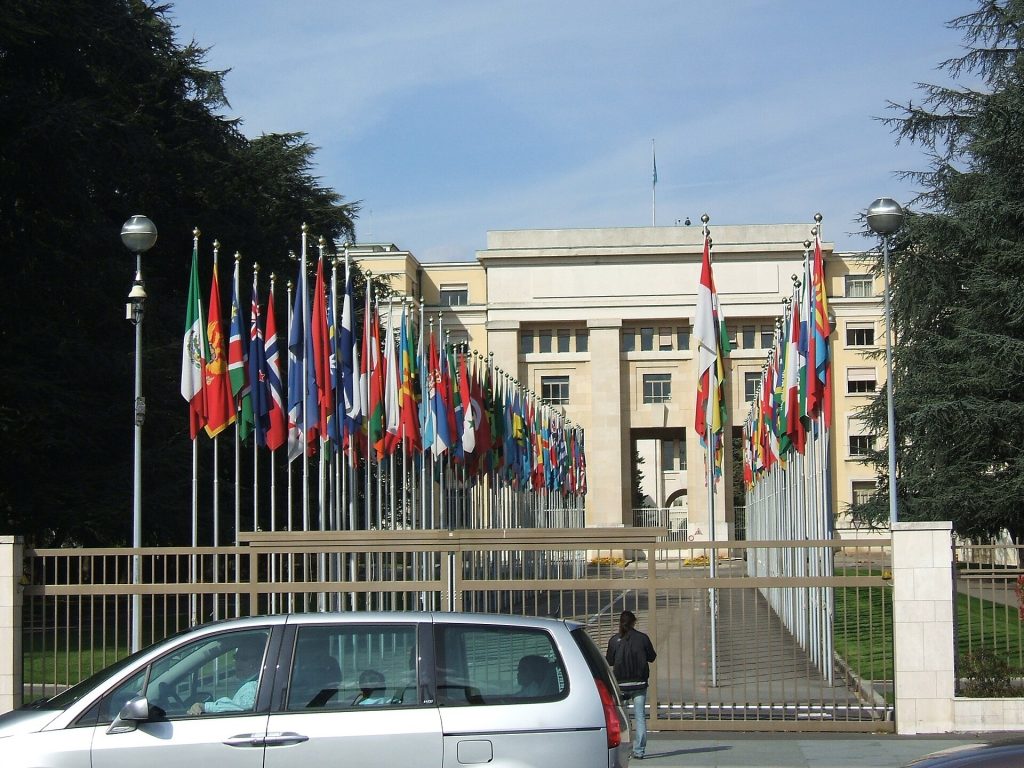
The $1.2 billion renovation of the Palais des Nations was intended to reaffirm Geneva’s centrality to the multilateral system. Instead, the city’s international quarter is emptying.
The World Health Organization (WHO) has cut hundreds of positions. The U.N. Children’s Fund (UNICEF) is relocating core administrative roles to Rome and Budapest. Other agencies are scaling back or relocating operations. The United States, which funds roughly a quarter of the U.N.’s regular budget, now owes approximately $2.2 billion, about 95% of all unpaid contributions to the organization.
Many will read this as a harbinger of the decline, or perhaps even the demise, of the U.N. system. Yet the crisis in Geneva may be creating the conditions for a more resilient multilateralism.
Critics claim that American taxpayers subsidized a U.N. bureaucracy hostile to their interests, one lacking accountability and captured by priorities divorced from its founding purposes. There is some truth to this. However, these arguments have marginalized those who wish to refound the U.N. system, rather than dismantling multilateralism wholesale.
The erosion of U.S. funding may be doing what decades of reform efforts could not: forcing a realignment of the U.N.’s structure with its mission. Numerous proposals, secretary-general initiatives, and expert panels have failed to produce meaningful change. The U.N.’s own 2021 Integration Review, drawing on input from over 200 staff members across the organization, found that institutional insulation undermined impact, calling for more decentralized decision-making and reforms responsive to field realities. Member states had pressed for the same for decades.
Meanwhile, Geneva came to embody the distance between those running the institution and the constituencies they were meant to serve. The compensation structure tells part of the story. Bureaucrats enjoyed tax-free salaries, exceptionally generous pension arrangements, housing allowances pegged to one of the world’s most expensive cities, business-class travel, and education grants that cover most of the cost of elite international-school tuition in Geneva, where annual fees often reach $45,000 per child per year.
One study of United Nations High Commissioner for Refugees (UNHCR) operations found spending of roughly $600 per refugee annually (around $800-850 in today’s dollars). U.N. reimbursements for a single child’s school fees in Geneva, in other words, could support dozens of refugees for a year. These arrangements are not reserved for senior leadership. They define the terms of employment for the typical international civil servant.
These terms apply to a substantial workforce. Switzerland hosts roughly forty international organizations that employ more than 25,000 people, most concentrated in the Lake Geneva region. The World Health Organization, the largest, employs roughly 2,400 people at its Geneva headquarters and operated on a biennial budget of $5.3 billion for 2026-27 before recent cuts. The International Labour Organization (ILO), UNHCR, the World Trade Organization (WTO), and others maintain significant presences in Geneva.
When the U.N. Secretary-General’s office issued a memo in April 2025directing Geneva and New York to identify posts for relocation to lower-cost duty stations, the Geneva staff union’s response was telling: its official statement declared the union “alarmed,” hundreds of staff demonstrated on International Workers’ Day to protect their Geneva postings, and unions defended housing subsidies, education grants, and tax exemptions as essential. These numbers and reactions reflect the insulation of much of Geneva from the realities the institution nominally exists to address.
Yet the crisis is strengthening the position of those within the system who have long called for change. The U.N. Children’s Fund (UNICEF)’s consolidationof regional functions to Bangkok, the expansion of U.N. agency operations in Nairobi, and shifting administrative functions to lower-cost duty stations all reflect a shift toward where the work actually is. Technology and the remote collaboration it enables make justifying the Geneva-centric model even more difficult. What once required flights to Geneva can now happen across multiple continents simultaneously.
Simply relocating institutions to less costly settings, however, risks reproducing Geneva’s pathologies — insulated professional communities, compensation structures detached from local conditions, and organizational cultures oriented more toward one another than toward the populations they serve. More than simply moving offices, structural reform requires confronting how these institutions are staffed, incentivized, and embedded in the political contexts in which they operate.
A more promising direction is aligning institutions with the political support and capacity of host nations. This goes beyond decentralization and proximity to need, toward placing authority where capacity and political will already exist. Former aid recipients that have become donors and regional powers in their own right — Poland, Chile, and South Korea among them — are natural candidates for anchoring this kind of multilateralism. Having navigated conflict, development, refugee flows, and political transition themselves, they bring the political legitimacy and operational credibility that Geneva-centered bureaucracies cannot replicate.
The substance of the changes also matters for the legitimacy of the international order. A multilateral system whose centers of decision-making remain in Geneva, New York, and a handful of donor capitals is vulnerable to the accusation that it represents a historical moment that has long passed. Institutions whose operational weight sits closer to the communities they serve, staffed by professionals embedded in supportive settings, are harder to displace. What survives will be better able to compete for relevance in a more contested world order.
Geneva will survive this crisis as a conference center for highest-stakes diplomacy and backroom dialogues that only physical proximity can enable. But what emerges beyond Geneva, in the field offices of agencies closer to the populations they serve and potentially in the hands of actors with the legitimacy and experience to carry multilateralism forward, may prove closer to what the system was always intended to be.
Many of the structural problems that have long plagued the U.N. will remain. The shifts now under way will not solve them. But they change where influence accumulates, and who shapes the decisions that matter. This new multilateralism may prove more resilient, more legitimate, and harder to hold captive to the politics of any single donor.


Be the first to comment