
Latin America is one of the regions most affected by extreme weather events, has the highest number of crimes against defenders of planetary health, and uses ‘collective natural resources for the benefit of wealthy minorities.’ ‘The Argentine government is a promoter and accomplice of these proven harmful actions’
Rubén Lo Vuolo is from Santa Fe. An economist by profession, he is the academic director and researcher at the Interdisciplinary Centre for the Study of Public Policy (CIEPP).
Cross.posted from Perfil
Translated by BRAVE NEW EUROPE
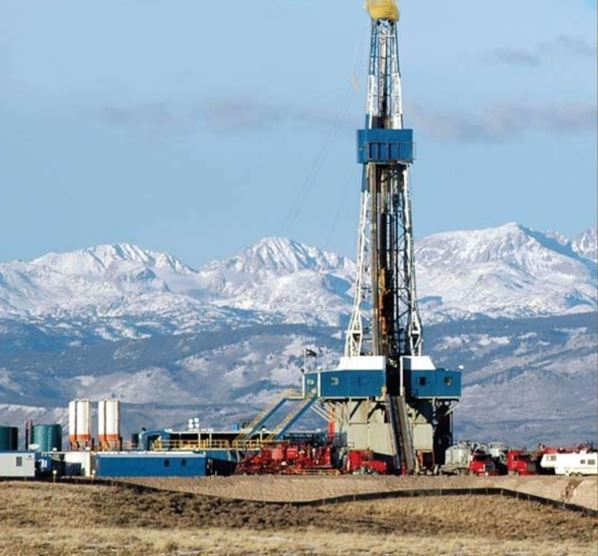
Photo: By kind permission of the US Bureau of Land management (Wikimedia Commons).
The climate summit, or COP 30, has just taken place in the Brazilian city of Belém, amid growing geopolitical tensions and urgent calls to halt the acceleration of the socio-ecological crisis, of which climate change is the most visible expression. After three summits in oil-producing and trading countries (Egypt, the United Arab Emirates and Azerbaijan), Belém was a symbol that promised strong commitments, placing the Amazon rainforest and Latin America at the centre of a planetary crisis.
Latin America is one of the regions where temperatures and extreme hydro-meteorological phenomena (storms, floods, droughts, heat waves) have increased the most, destroying infrastructure and natural environments, as well as claiming lives. Latin America is also the region with the highest number of people killed for their activities in defence of the environment.
The region suffers not only from carbon emissions from certain industries, but also from deforestation, open-pit mining, contamination of water reserves, unconventional gas extraction, and soil depletion due to the use of agrochemicals. These processes, which transform collective natural resources for the benefit of wealthy minorities, already threaten water availability, future energy supplies, the health and safety of the population, and increase the likelihood of catastrophic events.
Given these well-known harmful consequences, commitments were expected that would, for example, lead to the short-term elimination of fossil fuel extraction activities and the dismantling of related infrastructure.
Also, the promotion of alternative activities that would commit governments and corporations to the essential energy transition. This did not happen, proving once again that humanity is in the hands of ruling elites and private power groups who are willing to destabilise life on Earth in order to continue making money.
The Argentine government is a promoter and accomplice of these proven harmful actions, as evidenced by the mega-mining project in Mendoza, which has sparked understandable resistance, in addition to numerous other ‘ventures’ that threaten the environment throughout the country.
The collusion between governments and corporations suggests that fossil fuel extraction will continue to be subsidised, expanding the network of gas pipelines and other long-life infrastructure, the amortisation of which will not be feasible because the ecosystem cannot withstand it. According to Global Energy Monitor, more than 200 new or expanded oil and gas projects and more than 850 coal mines are under development or have been approved worldwide.
Furthermore, in 2023 there were 825 refineries, and the total capacity of crude oil distillation units is expected to increase by 15% by 2027. To make matters worse, damage to oil and gas infrastructure persists long after its decommissioning, due to methane leaks and other harmful consequences. As the dismantling of this infrastructure and its possible conversion are not included in the projects that continue to be approved, the outlook for the future is bleak. This is even more so given the terrifying escalation of war between powers and also in subordinate countries, the increase in military spending and the fall in oil prices.
All of the above reinforces perverse incentives in one of the main activities responsible for the socio-ecological crisis and further delays in its replacement. In the last decade, fossil fuels were responsible for 86% of carbon dioxide emissions, and coal mines ravage land, pollute waterways with acid drainage, and release dust and particles that are harmful to life. As a result, scientific evidence indicates that the possibility of achieving the target of 1.5°C above pre-industrial global temperatures has already been exhausted; at this rate, even the 2°C target cannot be achieved, with unpredictable consequences.
Argentina is complicit in this situation, promoting all kinds of polluting activities, from the much-lauded Vaca Muerta project, whose name is a premonition of the impact it has on life in its surrounding environment, to open-pit mining and increased degradation of productive soils through the use of toxic fertilisers, all of which is intended to be furthered by the repeal of the glacier law.
These destructive processes, which benefit the wealthiest groups, are linked to growing economic and social inequality: the responsibilities, costs and benefits of the socio-ecological crisis are distributed unevenly both between and within countries. It is estimated that 89% of the world’s population exposed to flooding lives in low- and middle-income countries.
Furthermore, it is estimated that the poorest 50% of the world’s population is responsible for only 10% of global emissions through their consumption, while the richest 10% accounts for 47%. The per capita emissions of a person belonging to the richest 1% globally are 75 times higher than those of a person in the poorest 50%.
As the poorest half of the world’s population owns only 3% of global wealth, it does not have the resources to protect itself from damage, bears the brunt of relative income losses, and suffers the impacts of displacement, deterioration of housing and health, etc.
In contrast, the richest 10% own 74% of global wealth and continue to accumulate resources to alleviate the harmful impacts of the socio-ecological crisis for which they are primarily responsible. Despite this, the world’s wealthy continue to decide the trajectory of polluting investments that generate a large part of their profits.
Consistently, at the global level, over the last three decades, the private sector’s share of total wealth has increased from 82% to 85%, while that of the public sector has fallen from 18% to 15%, with marked regional differences. Most of the assets of polluting companies are in the hands of private investors in OECD countries, with interests and partners in peripheral countries such as Argentina.
The refusal of these wealthy groups and their government accomplices to accept losses in their investments and their polluting standard of living is the main cause of the delay in policies to mitigate and adapt to the socio-ecological crisis.
This is despite the fact that the potential losses of these groups are proportionally small compared to their total wealth: it is estimated that in the United States, the aggregate value of assets that would lose value due to the change in the energy matrix represents only 0.4% of the net wealth of the richest 10%.
The greed of the wealthy minorities explains the failure of COP 30 as well as their attack on the capacities of states to regulate polluting activities and promote other ways of life that would enable us to tackle the crisis.
To close this circle around states and the majority of the population, very high costs are imposed in relation to litigation that will have to be faced if signed contracts are abandoned in order to continue with polluting activities.
Oil and gas projects protected by agreements between investors and states, which would have to be cancelled in order to achieve deep decarbonisation targets, could have a global net present value of between US$60 billion and US$234 billion.
The recently approved RIGI in Argentina is an example of these blackmailing practices that grant benefits to private individuals in the present, forcing them to bear inexorable economic and social costs in the future.
This is not the case: the socio-ecological crisis has already reached a turning point that requires drastic decisions to be made. In fact, the word “crisis” originally referred to the idea of “decision”. Crises are situations that cannot be prolonged over time, in which urgent decisions must be made because the status quo becomes unsustainable and no progress is being made in replacing it.
The acceleration of the socio-ecological crisis due to a lack of action to stop it makes it necessary to immediately ban all investments in fossil fuels and other polluting activities, promoting others that are appropriate for the energy transition.
Instead of subsidising polluting activities, we must impose fiscal penalties on the carbon content of all assets, whether physical or financial. Taxing polluting assets is even fairer than penalising consumption, because most consumers lack the decision-making power, information or affordable alternatives that would enable them to change their consumption patterns. On the other hand, owners of polluting assets can decide to invest their enormous wealth in other assets and thus positively influence the already desperate race to slow down environmental degradation.
Legal safeguards must also be put in place to protect future generations from the theft that potential litigation would entail for abandoning these polluting activities and moving forward with the dismantling of fossil fuel infrastructure. To replace it, a comprehensive programme is needed to build new infrastructure in line with the energy transition: these are socially and economically profitable investments for the future.
This calls for a programme of recapitalisation and regulatory strengthening of the state and civil society; major technological transformations — from aerospace to digital — were driven by public investment, so there is a strong justification for public action in this emergency, financing the long-term, high-risk projects that private actors avoid.
Clearly, everything the Argentine government is doing, and most other governments, runs counter to this. Polluting activities continue to be subsidised for the benefit of a few and against the prosperity of the majority of present and future generations, while social spending and any promotion of non-polluting activities are being cut. This situation leaves no other option: we must rise up from below against the irrationality and greed of those at the top.
The resistance in Mendoza to the project promoted by the national and provincial governments, like so many other similar resistance movements, must be openly supported in order to force a change in this polluting economic and social regime.
Rising up against those who appropriate common resources and threaten life in our societies is no longer an option: it is an urgent necessity given the irrationality and greed of the ruling elites.

Be the first to comment